
Champions in Their Own Right: Women Leading the Australia-Singapore Bilateral Story
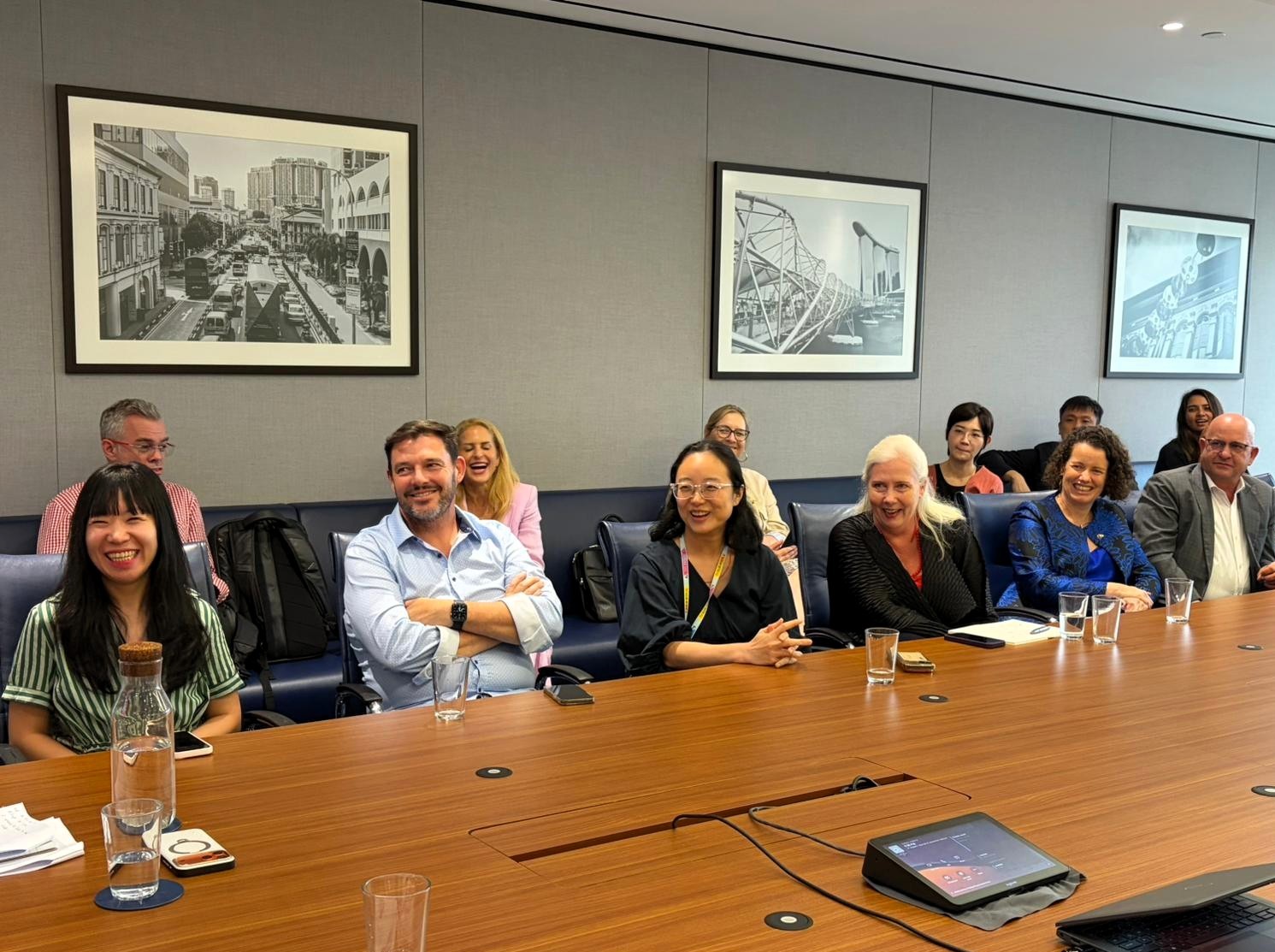
AustCham Singapore was honoured to have Andrew Stevens, Chair of the Champions of Change Coalition, join us on 27 August for a conversation about gender equality, inclusive leadership and artificial intelligence. The discussion sparked a deceptively simple question: what does it take to change the systems that shape opportunity?
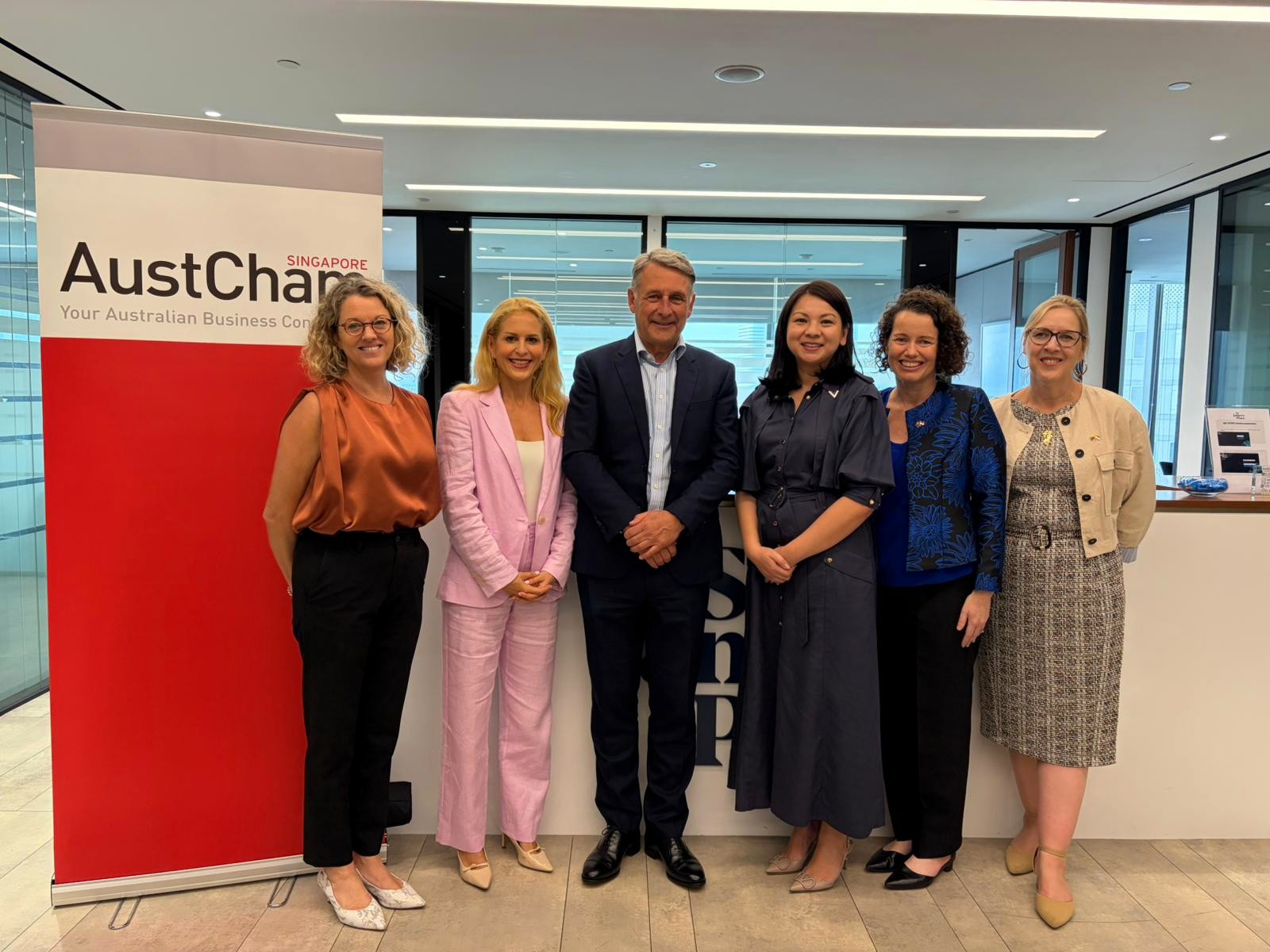
This was not framed as a conversation about women alone. Rather, it explored how leaders can use their influence to redesign workplaces, challenge entrenched systems and ensure inclusion is built into the way organisations operate – particularly as AI reshapes the future of work.
Yet, as the conversation unfolded, there was an interesting story playing out beyond the room.
At a time when the Australia-Singapore relationship is entering a new phase – encompassing trade and investment, technology, energy, defence, sustainability and regional cooperation –women are occupying an unusually prominent set of leadership roles across the bilateral network.
From diplomacy and economic engagement to business advocacy, Her Excellency Robyn Mudie, Emily Follett, Batya Shulman, Emily Walker, Amelia Walsh and Katrina Lourie are helping shape how Australia is represented, how businesses connect and how the relationship evolves. Together, they offer a timely reminder that leadership is not simply about who occupies the most senior seat. It is also about who is in the room, who has influence, and who is helping to shape what comes next.
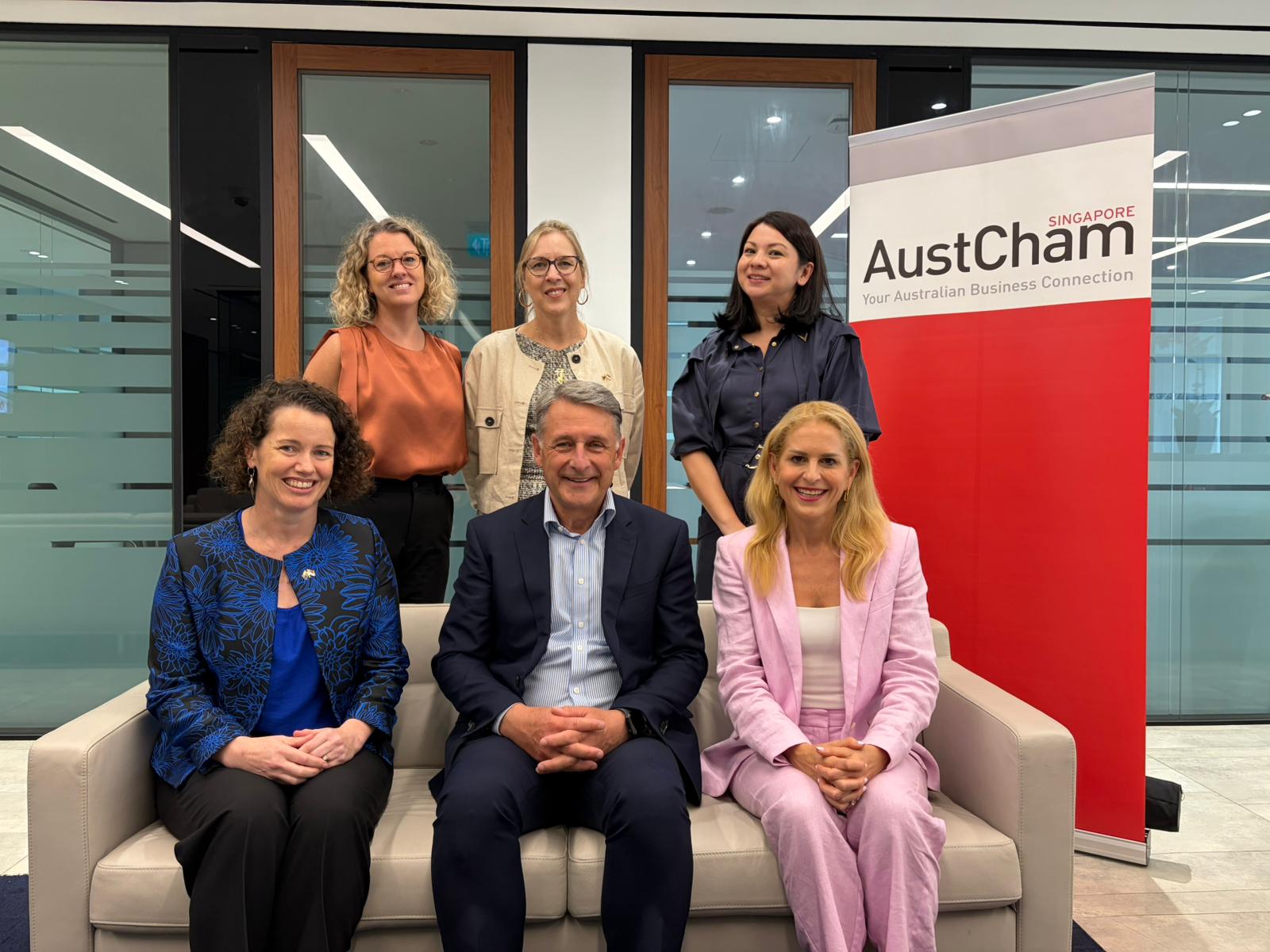
A relationship increasingly led by women
Consider the leadership landscape today.
At the Australian High Commission, Her Excellency Robyn Mudie is Australia's High Commissioner to Singapore, having taken up the role in May 2026. She is a senior career diplomat whose previous appointments have included Australian Ambassador to Vietnam and High Commissioner to Sri Lanka and the Maldives. Her appointment is particularly significant: she is the first female Australian High Commissioner to Singapore in 36 years. While the Singapore posting is an outlier, with Australian Head of Mission roles now being held roughly equally by women and men, High Commissioner Mudie’s appointment is an important milestone for the bilateral relationship.
Working alongside her is Emily Follett, Australia's Deputy High Commissioner to Singapore. A senior career officer with the Department of Foreign Affairs and Trade, Ms Follett has held senior policy and overseas roles spanning agriculture, trade negotiations and international law. She has become a familiar voice in the bilateral business community, regularly engaging businesses, policymakers and institutions across Singapore.
Katrina Lourie, Counsellor (Economic) at the Australian High Commission, adds another important dimension to that diplomatic presence. Her portfolio sits at the intersection of economic policy and the commercial relationship, and she has been a regular participant in discussions with the Australian business community on Singapore's economic outlook and opportunities for Australian businesses.
Also part of this broader bilateral network is Amelia Walsh, Senior Trade and Investment Commissioner at the Australian Trade and Investment Commission (Austrade). In Singapore, Amelia leads efforts to advance Australia’s ambitious two-way trade and investment agenda, while also holding a regional Southeast Asia mandate focused on attracting investment into Australian priority sectors. Beyond her role at Austrade, Amelia also serves on the AustCham Singapore Board, contributing her experience and perspective to the Chamber’s work to strengthen connections between the Australian and Singaporean business communities.
On the business advocacy side, Batya Shulman is about to make her own piece of history as AustCham Singapore's first female President. Following three years on the Board – first as Honorary Treasurer and then as Vice President – she takes on the Presidency at a particularly important point for the Chamber and the bilateral business community.
As Batya herself reflected following her appointment:
“The Chamber has such an important role to play in strengthening the Australia-Singapore relationship, supporting our members and creating opportunities and value for our business community.”
Her leadership is complemented by Emily Walker, who joined AustCham Singapore as Executive Director in 2026. Bringing more than two decades of experience across strategic partnerships, business development, communications and stakeholder engagement in Australia, Singapore, Hong Kong and the region, Emily is leading the Chamber's next phase of growth and engagement.
The significance of this group is not simply that there are six women in senior positions.
It is that their roles span different parts of the bilateral ecosystem: diplomatic representation, economic engagement, business advocacy, member engagement and organisational leadership.
That breadth matters.
From representation to influence
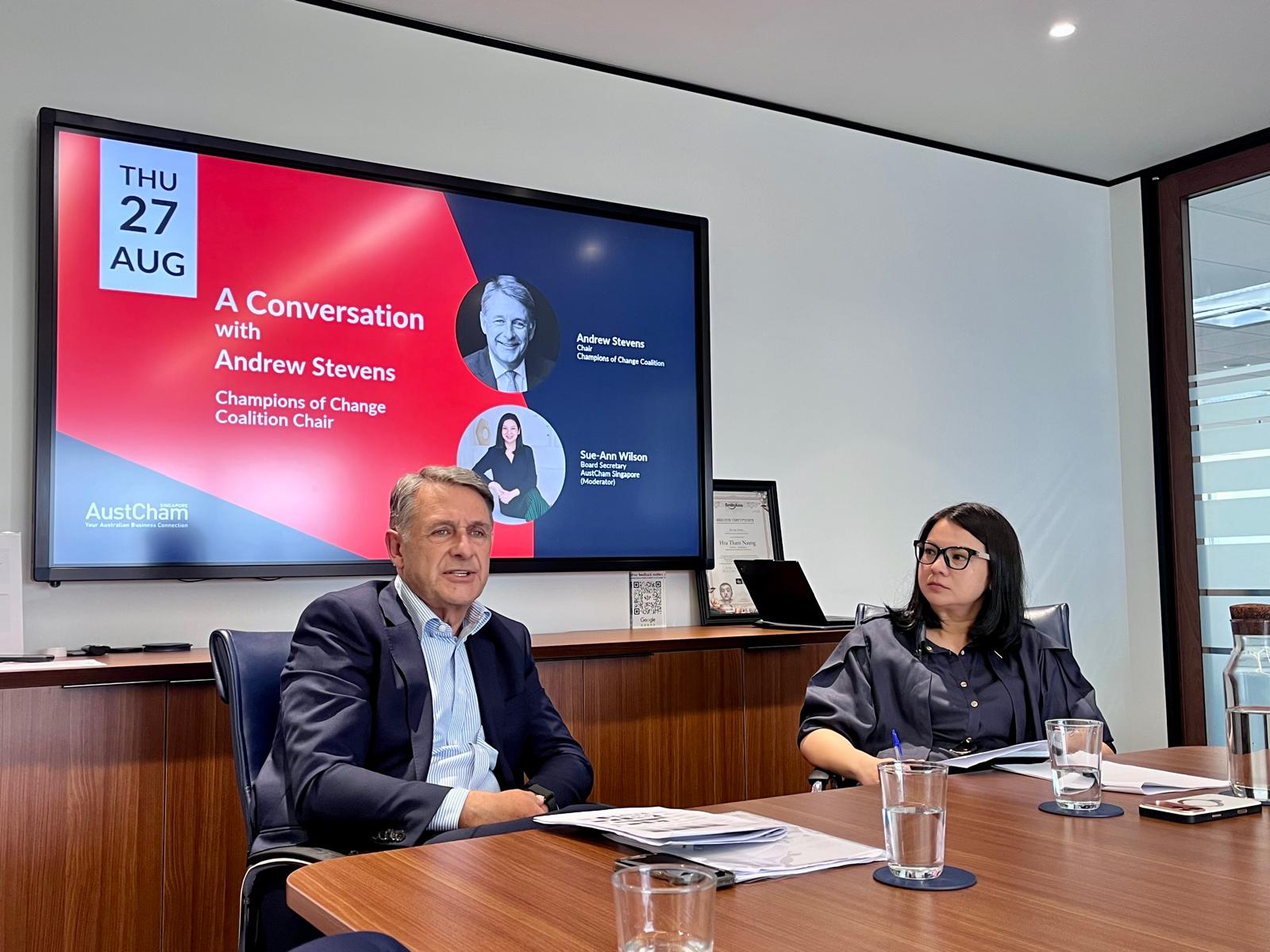
This is where the conversation with Andrew Stevens, expertly moderated by Sue-Ann Wilson, AustCham Singapore Board Secretary and ex-Executive Director, becomes particularly relevant.
A central argument from Andrew was that progress does not come from simply “fixing” individuals. It comes from changing the systems and processes that determine who gets opportunities in the first place.
As he put it:
“Unless we work to consciously include women, the systems will subconsciously exclude women.”
It is a powerful distinction.
For decades, much of the conversation around gender equality has focused on encouraging women to put themselves forward, build confidence, seek mentors or become “board ready”. But as the discussion in Singapore highlighted, the supply of capable women is not necessarily the problem.
The harder question is whether the systems that determine who gets noticed, trusted, sponsored and appointed are designed to recognise that talent.
That point resonated strongly during the session's discussion of Singapore. Andrew observed that Singapore has a highly educated and capable female workforce, yet female representation at the most senior levels has not necessarily advanced at the same pace.
The challenge, therefore, is not simply creating more qualified women. It is creating more pathways for qualified women to exercise influence.
And this is precisely why the current Australia-Singapore leadership landscape is worth noticing.
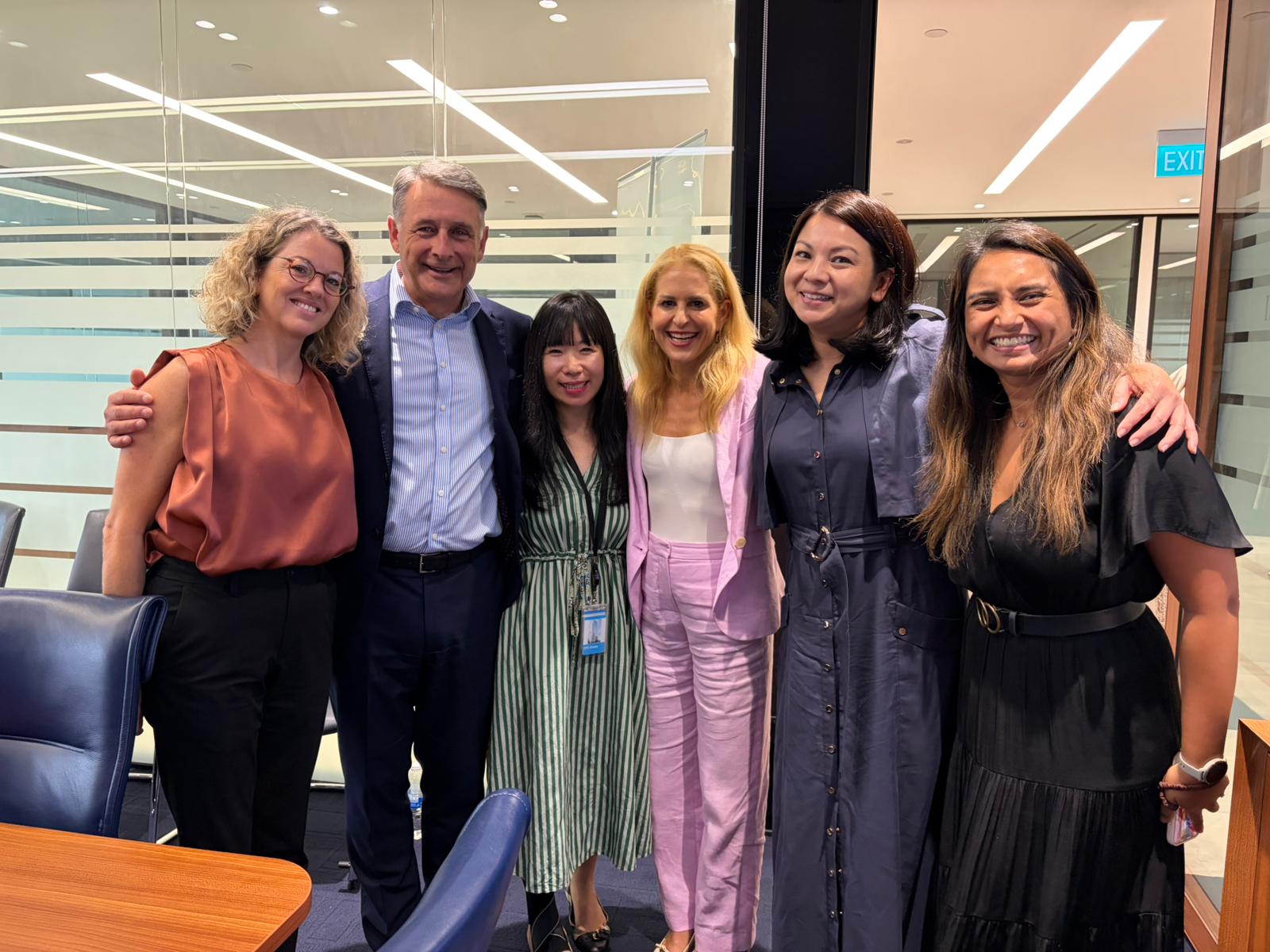
The power of seeing leadership differently
The presence of women in these roles does not, by itself, solve gender inequality. Nor should women leaders be expected to carry the responsibility for solving it.
But representation changes what is visible – and what becomes imaginable.
When the Australian High Commission is led by a woman, with women also playing senior roles in economic and diplomatic engagement, the picture of what Australian leadership looks like becomes broader.
When AustCham Singapore appoints its first female President after nearly three decades of bilateral engagement, it creates another reference point for what leadership in business advocacy can look like.
And when the Chamber's Executive Director is also a woman, the organisation's senior leadership reflects an increasingly diverse leadership pipeline.
This matters not because women lead differently by default, but because leadership is strengthened when the pool from which leaders are selected is wider.
It also reflects a broader shift in the Australia-Singapore relationship itself.
The relationship is no longer defined solely by government-to-government ties. It is increasingly built through businesses, investors, universities, professional networks, entrepreneurs, technology companies and people working across borders.
The leaders connecting those networks therefore have an important role in shaping not only commercial outcomes, but also the character of the relationship.
A bilateral relationship with a broader leadership story
The Australia-Singapore relationship has always been underpinned by people who can build trust across institutions, sectors and borders.
Today, that leadership network looks increasingly different from the one that existed a generation ago.
The story is not that women have arrived in leadership; women have always been leading.
The story is that their leadership is increasingly visible across the institutions that shape the bilateral relationship – and that visibility itself can help shift expectations about who gets to lead.
From champions to change
Perhaps the most valuable lesson from the 27 August session was that meaningful change rarely happens through representation alone.
It requires people in positions of influence to make conscious choices – to question established processes, open doors, challenge assumptions and create opportunities for others.
Andrew described this as the “leadership shadow”: the idea that what leaders prioritise, say yes to, say no to and spend time on sends powerful signals to everyone around them.
The women leading important parts of the Australia-Singapore relationship today are therefore not just beneficiaries of a changing leadership landscape.
They are part of the change itself.
And the opportunity now is to make that change systemic.
For businesses across the Australia-Singapore community, that means looking beyond the question of whether there are women in the room and asking a more fundamental question:
Who has the influence to shape what happens next – and are we making sure the widest possible range of talent has the opportunity to exercise it?
That is ultimately the challenge at the heart of the Champions of Change movement.
The Coalition's 2026-2030 strategy is focused on practical action, collective leadership and accountability, bringing CEOs and senior leaders together to identify barriers, test solutions and share what works.
For organisations looking to take the next step, engaging with the Champions of Change Coalition is one way to move from conversation to action – by joining a community of leaders committed to building more inclusive workplaces and changing the systems that shape opportunity.
Because champions do not simply occupy positions of influence.
They use that influence to create more champions.
Key Takeaways
- Representation matters, but influence matters more. Having women in senior leadership positions changes what leadership looks like – but the real measure of progress is whether they have the influence to shape decisions and outcomes.
- The challenge is systemic, not a question of talent. As Andrew Stevens highlighted, organisations need to examine the systems and processes that determine who gets noticed, sponsored and appointed, rather than placing the burden on women to become “more ready”.
- The Australia-Singapore relationship is being shaped by a broader leadership network. From diplomacy and economic engagement to business advocacy and member leadership, women are playing increasingly prominent roles across the bilateral ecosystem.
- Inclusive leadership is a business imperative. As workplaces evolve and AI transforms the future of work, inclusion needs to be considered at the design stage – not treated as an initiative to be added later.
- Leaders have a responsibility to use their influence. The “leadership shadow” reminds us that what leaders prioritise, challenge and make space for sends powerful signals throughout an organisation.
- The next step is turning representation into systemic change. The opportunity for businesses is to look beyond who is in the room and ask whether their structures, processes and cultures are enabling the widest possible range of talent to lead.
AustCham Singapore welcomed members and guests to this exclusive invite-only roundtable discussion. We look forward to sharing more opportunities like this with you in the future. Get in touch with us to talk about your membership experience.