
Singapore as Australia’s Launchpad to Southeast Asia: Insights from AustCham Singapore’s Breakfast Briefing with H.E. Robyn Mudie
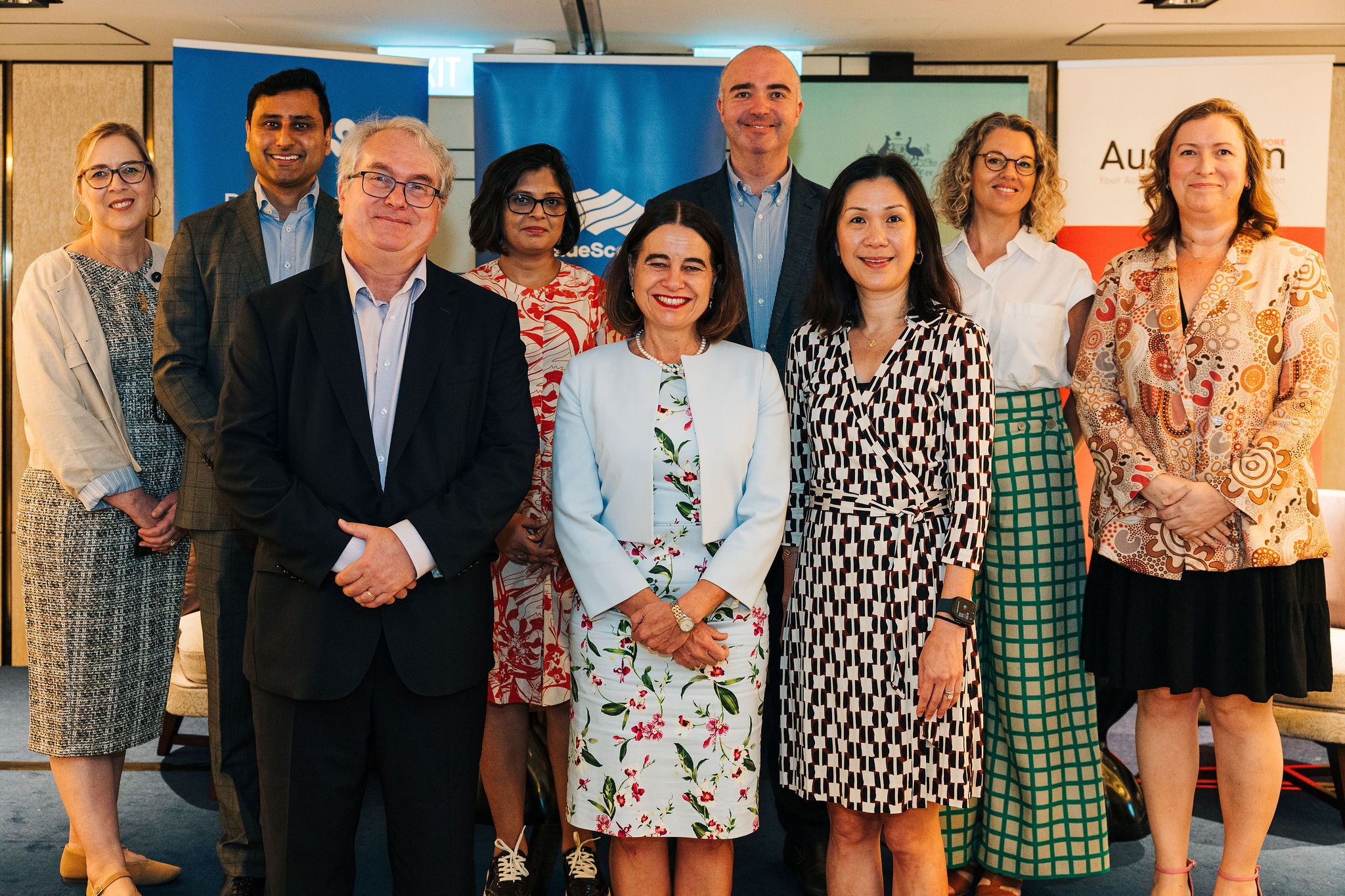
At AustCham Singapore’s Breakfast Briefing on 13 August 2026, Her Excellency Robyn Mudie - Australian High Commissioner to Singapore and Patron of AustCham Singapore - and senior Team Australia representatives explored the opportunities ahead for Australian businesses in Singapore and across Southeast Asia.
In a period of global uncertainty, the Australia-Singapore relationship continues to stand out for its depth, practicality and ambition.
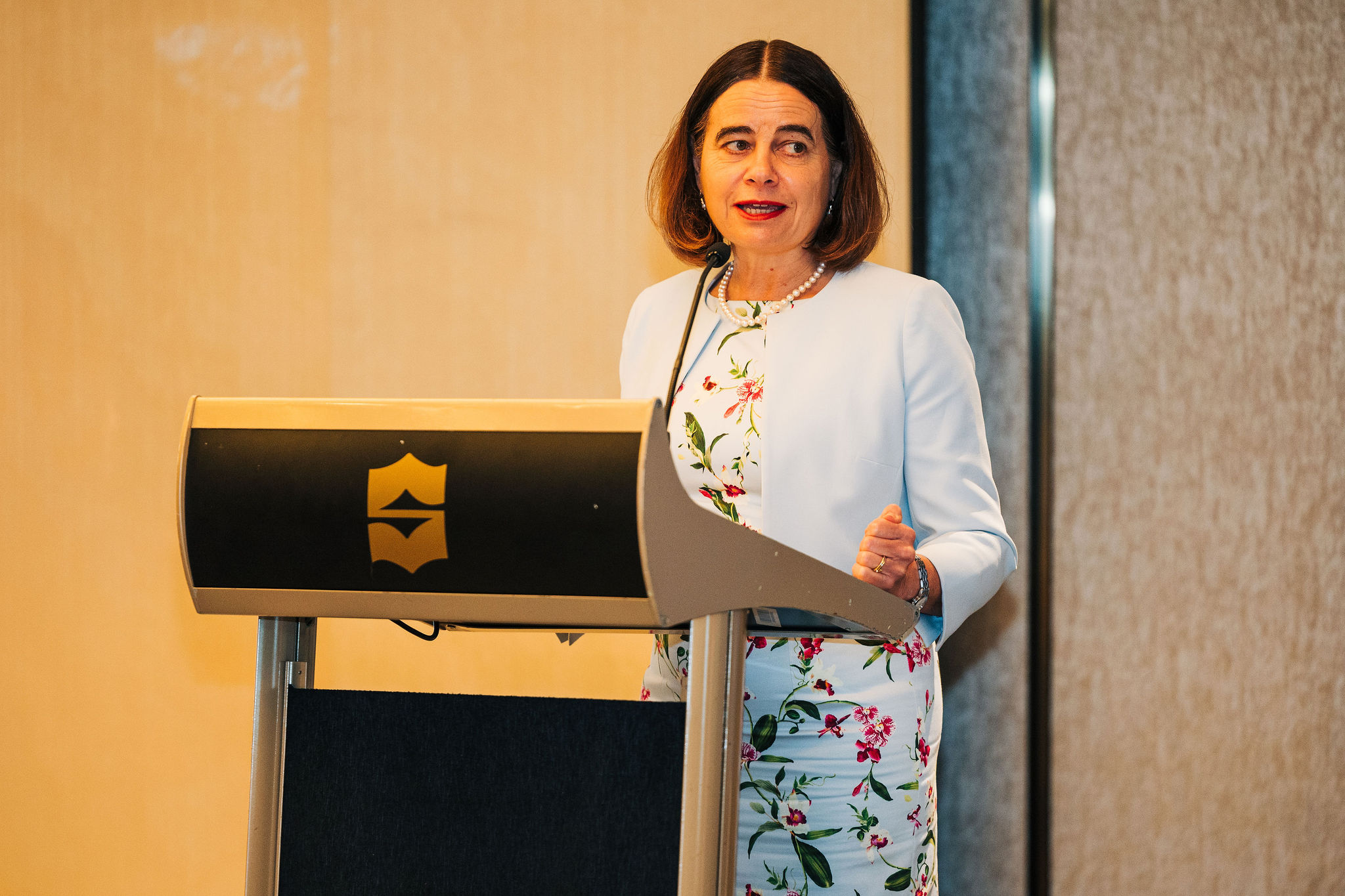
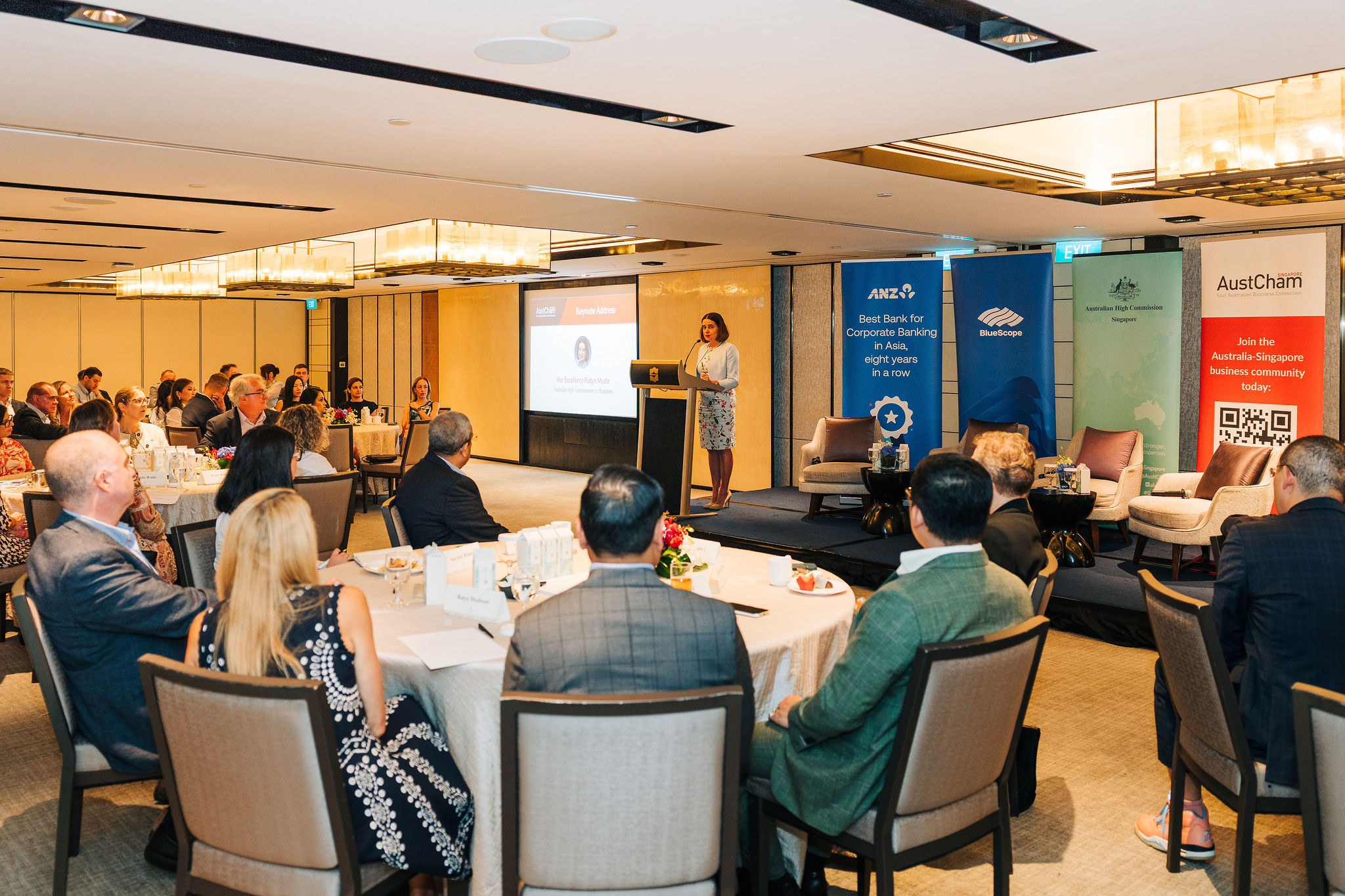
That was the central message at AustCham Singapore’s recent Breakfast Briefing with Her Excellency Robyn Mudie, Australian High Commissioner to Singapore. In her opening keynote address, High Commissioner Mudie reflected on the strategic importance of the bilateral relationship, Singapore’s role as a regional hub, and the opportunities for Australian businesses willing to take a long-term view of Southeast Asia.
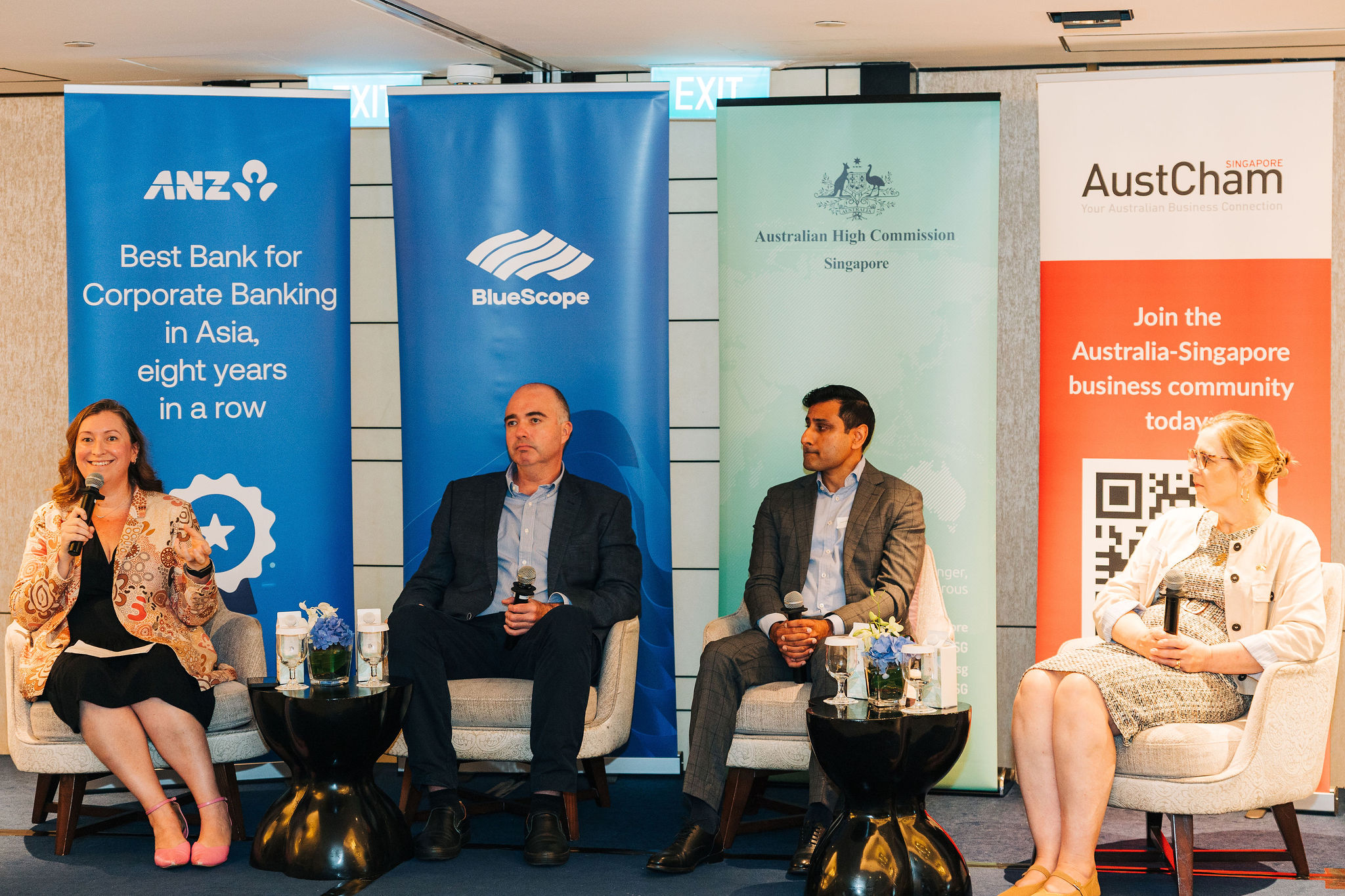
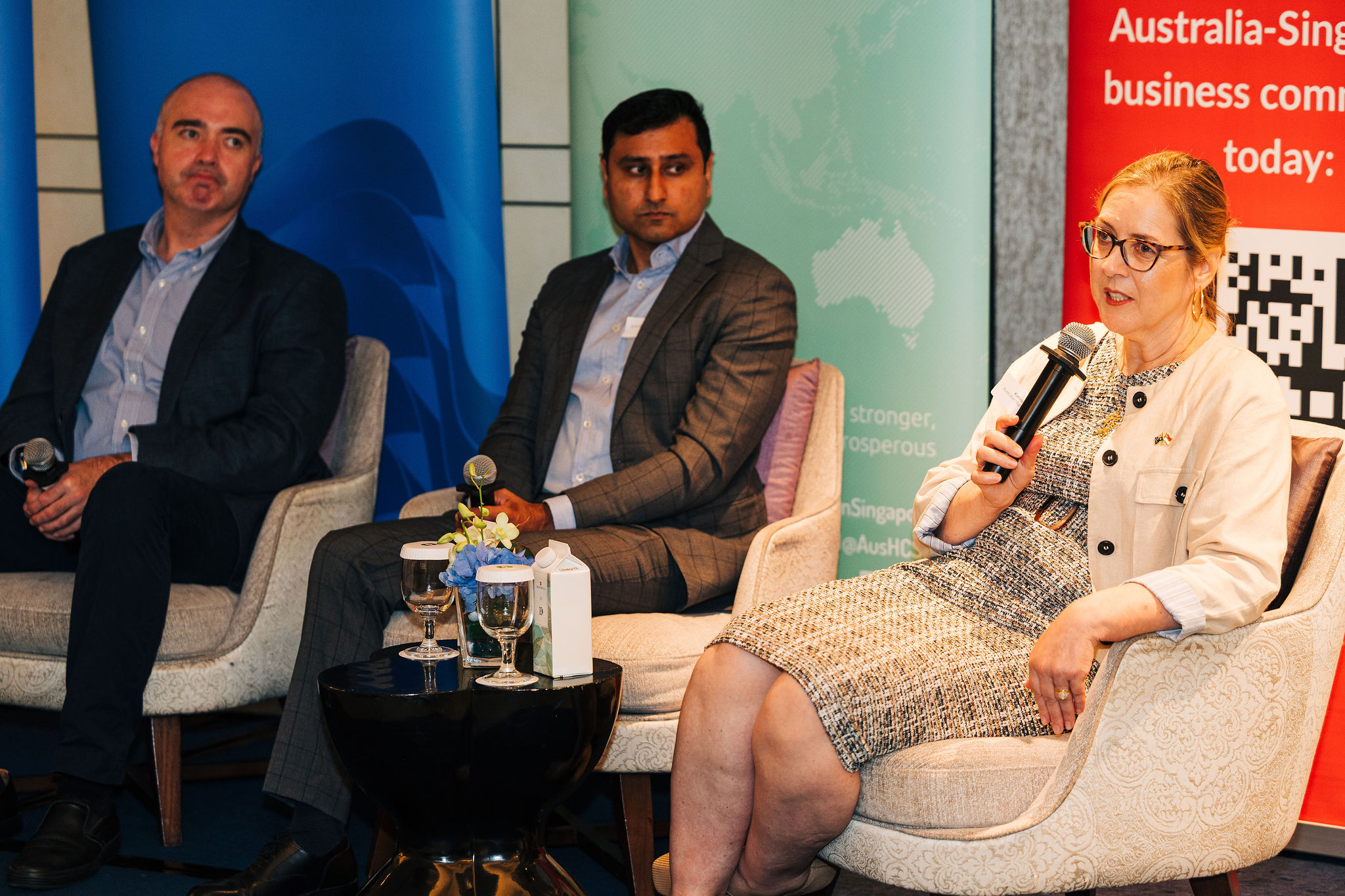
Joining the High Commissioner was a panel of senior Team Australia representatives: Amelia Walsh, David Wise and Gaurav Johri from Australian Trade and Investment Commission (Austrade), alongside Katrina Lourie from the Australian High Commission. Together, they offered practical perspectives on how Australian businesses can establish, grow and deepen their presence in Singapore and the region.
A relationship built for the future
High Commissioner Mudie, who had recently marked her first 100 days in Singapore, described the country as a hub not only for trade and investment, but also for capital, ideas, innovation and regional decision-making.
With Singapore set to chair ASEAN in 2027, its influence will be especially important in shaping the region’s economic and strategic agenda. For Australian businesses, this reinforces Singapore’s value as a base from which to access customers, investors, partners and supply chains across Southeast Asia.
Southeast Asia’s economic momentum remains compelling. Its population of around 700 million, growing middle class and expanding demand across digital infrastructure, financial services, education, food security, renewable energy, advanced manufacturing and professional services present significant opportunities for Australian capability.
More importantly, this is not simply a story of market size. It is also a story of diversification, resilience and integration.
More than 5,000 Australian companies now use Singapore as a launchpad into the region - evidence of the growing confidence Australian businesses have in Singapore as a platform for regional growth.
Turning agreements into commercial opportunity
The briefing took place against a backdrop of increasingly substantive Australia-Singapore cooperation.
The High Commissioner highlighted the recent Singapore-Australia Joint Ministerial Committee meeting in Adelaide, which brought together ministers responsible for defence, foreign affairs and trade. Discussions covered areas that will shape both countries’ future economies, including artificial intelligence, clean energy, submarine cables, defence industry resilience and supply-chain security.
A particularly significant outcome has been the new Protocol on Economic Resilience and Essential Supplies. The Protocol reflects a shared commitment to supporting the flow of essential supplies between Australia and Singapore, including in petroleum products and liquefied natural gas, during periods of disruption.
The first Australia-Singapore Ministerial Dialogue on Energy also reinforced the two countries’ shared focus on energy security and decarbonisation. Priority areas for cooperation include cross-border electricity trade, low-carbon fuels, carbon capture and storage, renewable energy deployment and supply-chain resilience.
For business, these frameworks are more than diplomatic milestones. They provide a stronger foundation for investment, innovation and collaboration - creating greater certainty for supply chains and new opportunities in the energy transition, digital trade, AI and the green economy.
The Team Australia advantage
The panel discussion showed how Team Australia can help translate these broader policy settings into practical business outcomes.
Austrade’s work spans trade, investment and market development, with support tailored to businesses at different stages of their journey. This can range from market advice and business matching to assistance navigating regulatory issues, identifying partners and developing a clearer market proposition.
The panel also emphasised the strength of the wider Team Australia network: Austrade, the Australian High Commission, state and territory governments, industry associations, Export Finance Australia and organisations such as AustCham Singapore. Together, these organisations help businesses access commercial connections, policy advocacy and financing support.
For Australian companies expanding from Singapore into the region, the message was straightforward: ask for help early and use the knowledge of businesses already active in-market.
Where the opportunities are emerging
Several growth areas featured prominently in the conversation.
Energy is expected to remain a major focus, particularly as Singapore advances regional energy connectivity and ASEAN works towards greater integration through the ASEAN Power Grid. Australian businesses have opportunities across the energy value chain, from project development and infrastructure to low-carbon technologies, professional services and supply-chain solutions.
Digital technology and AI are another priority. Singapore is positioning itself as a regional centre for AI innovation, deployment and regulation, creating opportunities for Australian technology companies in sectors ranging from health and hospitality to logistics and financial services. Austrade’s upcoming participation at Singapore Tech Week and the Singapore FinTech Festival will provide further opportunities for Australian firms to connect with potential partners and customers.
The panel also pointed to opportunities in data centres, manufacturing, logistics, defence, tourism infrastructure, real estate and the broader green economy. Singapore’s role as a regional headquarters location continues to be particularly valuable for companies seeking to serve Southeast Asia from a stable, connected and globally recognised base.
Building relationships, not just transactions
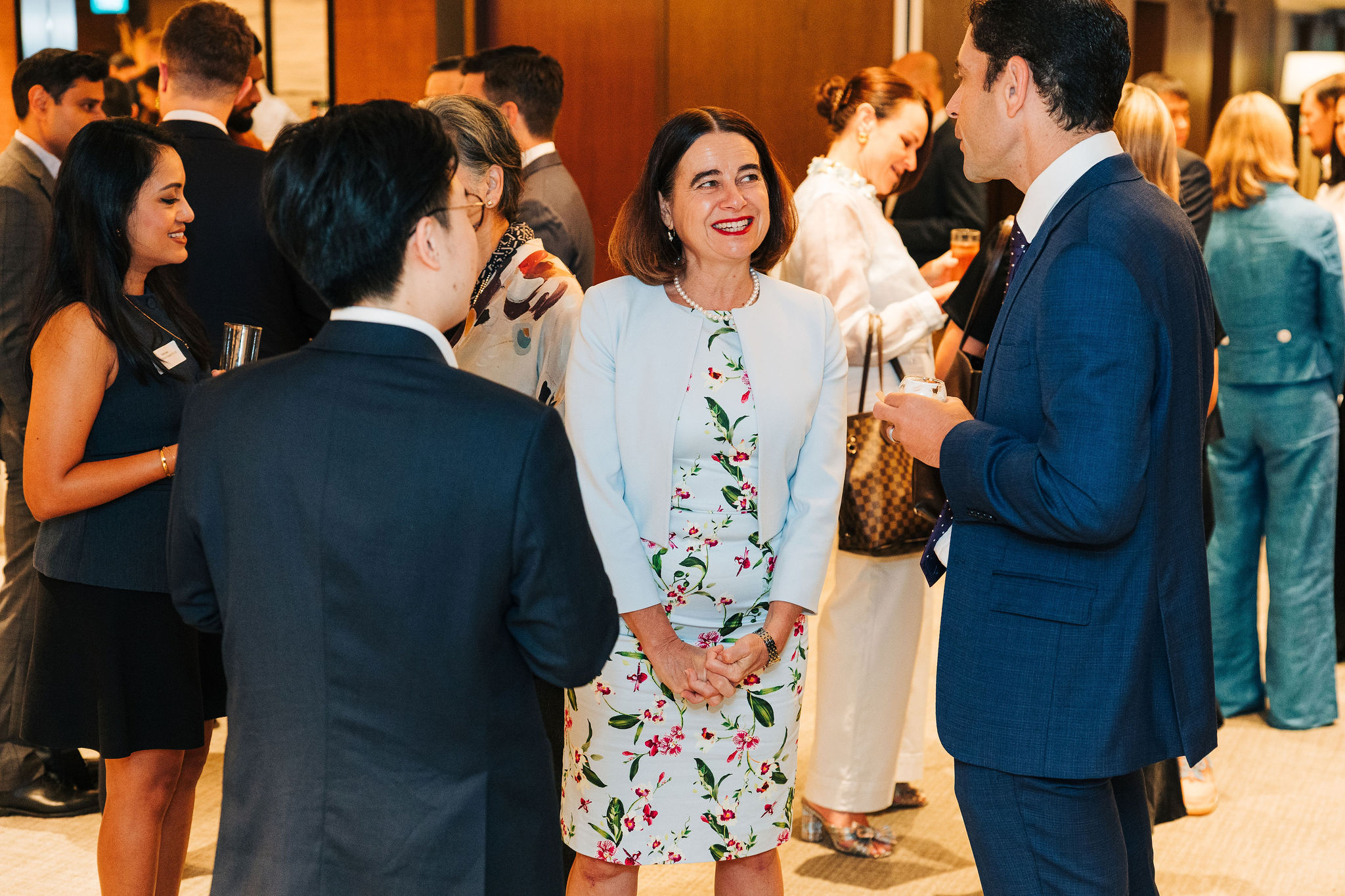
While the opportunities are substantial, the panellists stressed that success in Singapore and Southeast Asia requires more than a strong product or service.
Businesses need to invest in regular engagement with partners, understand customer needs and local business culture, and communicate a clear value proposition. Demonstrated success with comparable clients or competitors can also help a company’s pitch cut through.
Singapore’s major national priorities and large-scale projects are another useful signal for businesses. Understanding where investment is being directed - identifying the contractors, system integrators and partners involved - can often be as important as engaging directly with the largest government-linked corporations.
As the High Commissioner noted, the future of the Australia-Singapore relationship will be shaped not only by government-to-government agreements, but also by the partnerships businesses build with one another across the region.
For Australian companies, Singapore remains a trusted partner, an effective launchpad and a gateway to one of the world’s most dynamic economic regions.
Key Takeaways
- Singapore remains a critical gateway for Australian businesses seeking to grow across Southeast Asia.
- Australia-Singapore cooperation is creating practical opportunities in energy security, decarbonisation, digital trade, AI, supply-chain resilience and investment.
- Businesses will be best placed to succeed by taking a long-term approach: understanding local market needs, building trusted relationships and presenting a clear value proposition.
- Team Australia - including Austrade, the Australian High Commission, Export Finance Australia, state and territory governments, and AustCham Singapore - can help businesses access market intelligence, connections, advocacy and financing support.
- With Singapore set to chair ASEAN in 2027, the year ahead will offer further opportunities for Australian businesses to engage with regional economic priorities – AustCham Singapore members can look forward to sharing key events and insights throughout the year.
Useful Links
- Australia-Singapore Comprehensive Strategic Partnership 2.0 (2025–35)
- Invested: Australia’s Southeast Asia Economic Strategy to 2040 — Singapore country profile and action plan
- 15th Singapore-Australia Joint Ministerial Committee Meeting
- Inaugural Australia-Singapore Ministerial Dialogue on Energy in Sydney, Australia
- Austrade: Exporting and investment support
AustCham Singapore welcomed members and guests to this exclusive breakfast event. We look forward to sharing more opportunities like this with you in the future. Get in touch with us to talk about your membership experience.